 Mon to Fri, 7am to 6pm


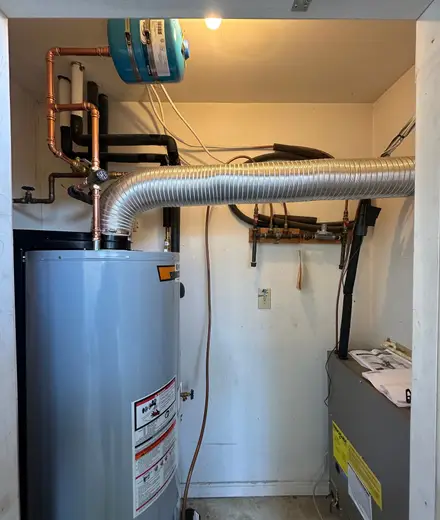
Water Heater Repair for Leaks, Lost Hot Water and Sediment
Most water heater calls start with one of three things: water where it shouldn't be, no hot water, or a tank that rumbles and runs out early. Here is what each one usually means.
Water Heater Leaking
A leak at the top of the tank often comes from a loose fitting, a worn supply connection or the relief valve, and those are usually fixable. Water coming from the bottom of the tank itself is a different story, because it usually means the steel inside has rusted through. We find the source first, so you only replace the heater when it actually needs replacing. If the tank is leaking, close the cold water valve on top and turn off its gas or power until we get there.
No Hot Water
On a gas water heater, no hot water often points to the pilot, the thermocouple or the gas control valve. On an electric heater, it's usually a burned-out heating element or a thermostat. If you have hot water but it runs out fast, one element may be working while the other has failed. These parts can be replaced on most heaters, and we'll tell you whether the rest of the tank is worth keeping.
Water Heater Flush and Sediment Buildup
Minerals in the water settle at the bottom of the tank over time. That layer of sediment makes the burner work harder, causes popping and rumbling noises, and cuts the amount of hot water you get. Flushing the tank drains the sediment out and is worth doing on a regular schedule, especially before the buildup hardens and clogs the drain valve.
Rumbling Noises and a Rotten Egg Smell
Popping and rumbling come from water boiling up through a layer of sediment on the bottom of the tank. A hot water smell like rotten eggs is a different problem: bacteria in the water reacting with the anode rod inside the tank, which is more common in homes on a private well. Flushing the tank and swapping the anode rod for a different type usually clears the smell without replacing the heater.
Tankless Water Heater Repair and Boiler Repair
We work on the whole hot water side of the house, which on many Howard County homes includes a tankless unit or a boiler.
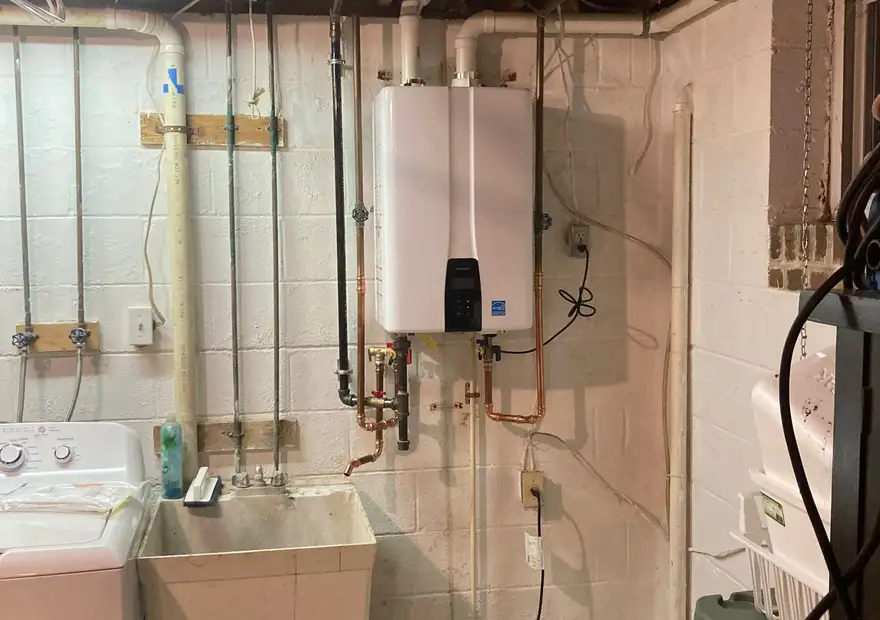
Tankless Water Heater Repair and Service
Tankless water heaters show an error code when something goes wrong, which helps narrow down the problem. Common causes are scale buildup in the heat exchanger, a dirty inlet filter, venting problems and gas supply issues. Descaling the unit on a regular schedule keeps it heating properly and adds years to its life, so ask about a service visit if yours hasn't been flushed in a while.
Boiler Repair
A boiler heats your home with hot water running through baseboards or radiators, and many also make the house's hot water. When rooms stay cold, the boiler cycles on and off, or you hear banging in the pipes, the cause is often a circulator pump, a pressure problem, air trapped in the lines or a failed control. We check the boiler and its piping and explain what needs fixing before we start.
When to Repair a Water Heater and When to Replace It
A repair makes sense when the tank itself is sound and a part has failed, such as an element, a thermocouple or a valve. Replacement usually makes more sense when the tank is leaking from the bottom, the water comes out rusty, or the heater is old and needing repairs more often. We'll lay out both choices with what each one involves, and if a new unit is the better buy, see water heater replacement for how that works.
Water Heater Repair in Elkridge and Nearby Towns
Z's Plumbing repairs water heaters in Elkridge, Ellicott City, Columbia, Clarksville, Savage and Jessup in Howard County, around Glen Burnie and Linthicum in Anne Arundel County, and in Catonsville and Arbutus in Baltimore County.